जमीन का कोई भी ऑनलाइन काम — जमाबंदी देखना, लगान भरना, एलपीसी, ई-मापी या दाखिल-खारिज — खाता और खेसरा नंबर के बिना आगे नहीं बढ़ता। लेकिन बहुत से लोगों के पास पुराने कागज़ नहीं होते, या होते भी हैं तो उनमें नंबर पढ़ना मुश्किल होता है। इस गाइड में सिर्फ़ नाम से खाता-खेसरा पता करने के 5 तरीके और इन नंबरों का सही मतलब समझिए।
खाता, खेसरा, जमाबंदी संख्या — अंतर समझें
| नंबर | मतलब | कहाँ मिलता है |
|---|---|---|
| खाता संख्या | सर्वे के समय किसी रैयत/परिवार की सभी जमीनों का समूह | खतियान, जमाबंदी, केवाला |
| खेसरा संख्या | जमीन के एक टुकड़े (प्लॉट) का नंबर; नक्शे पर इसी से पहचान | खतियान, जमाबंदी, भू-नक्शा |
| जमाबंदी संख्या | अंचल में रैयत के नाम खुले चालू खाते का नंबर | जमाबंदी पंजी, लगान रसीद |
| थाना संख्या | सर्वे में मौजा (राजस्व गाँव) की पहचान संख्या | खतियान, केवाला |
तरीका 1: जमाबंदी पंजी में रैयत के नाम से खोज (सबसे आसान)
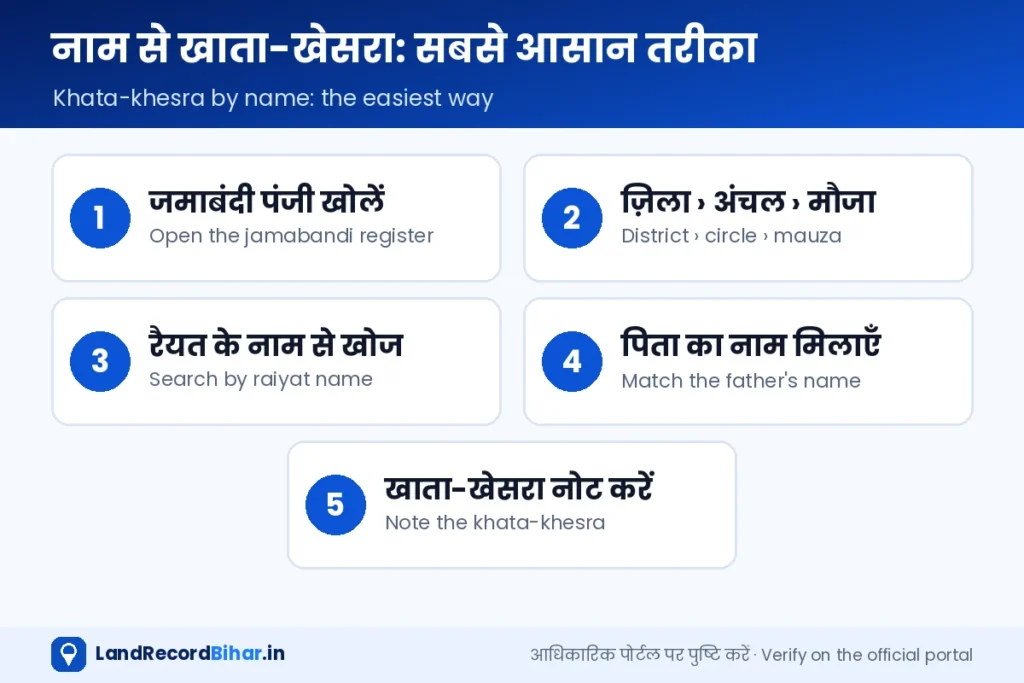
- जमाबंदी पंजी खोलें: बिहार भूमि पर “जमाबंदी पंजी देखें”।
- स्थान चुनें: ज़िला → अंचल → हल्का → मौजा। (पता नहीं? देखें अंचल-हल्का-मौजा कैसे पता करें।)
- “रैयत के नाम से” खोज चुनें: नाम का छोटा हिस्सा लिखें, जैसे पूरे “रामेश्वर प्रसाद सिंह” की जगह “रामेश्वर”।
- सूची में पिता का नाम मिलाएँ: एक जैसे नाम कई हो सकते हैं — पिता/पति के नाम से सही व्यक्ति चुनें।
- “देखें” पर क्लिक करें: जमाबंदी में खाता, खेसरा और रकबा दिख जाएँगे — इन्हें नोट कर लें।
जमाबंदी पंजी खोलें ↗ डैशबोर्ड पर सेवा
नाम की वर्तनी बदलकर देखें (जैसे “प्रसाद/परसाद”, “देवी/देबी”), सिर्फ़ उपनाम या पहला शब्द लिखें, या पिता/दादा का नाम आज़माएँ — कई बार जमीन अब भी पूर्वज के नाम पर होती है।
तरीका 2: लगान रसीद या केवाला देखें
पुरानी लगान रसीद में आम तौर पर जमाबंदी संख्या, भाग-पृष्ठ, खाता और खेसरा लिखे होते हैं। केवाले में खरीदी गई जमीन का खाता, खेसरा, रकबा और चौहद्दी दर्ज होती है। ऑनलाइन रसीद भी भू-लगान पोर्टल से दोबारा निकाली जा सकती है।
तरीका 3: भू-नक्शा पर प्लॉट पर क्लिक करें
अगर आपको पता है कि खेत गाँव में कहाँ है, तो भू-नक्शा पर मौजा का नक्शा खोलें और उस प्लॉट पर क्लिक करें — खेसरा संख्या दिख जाएगी। फिर उसी खेसरा से जमाबंदी खोजें।
तरीका 4: खतियान (भू-अभिलेख)
पुश्तैनी जमीन के लिए भू-अभिलेख पोर्टल से खतियान निकालें। उसमें खतियानी रैयत के नाम के सामने खाता और सभी खेसरा दर्ज होते हैं। पुराना खतियान कैथी में हो तो कैथी गाइड देखें।
तरीका 5: हल्का कर्मचारी से पूछें
ऑनलाइन कुछ न मिले तो अपने हल्का के राजस्व कर्मचारी या अंचल कार्यालय से रैयत के नाम पर जमाबंदी विवरण माँगें।
सावधानियाँ
- एक खाते में कई खेसरा और एक खेसरा कई लोगों में बँटा हो सकता है — रकबा ज़रूर मिलाएँ।
- विशेष सर्वे के बाद नए खाता-खेसरा नंबर बन सकते हैं; पुराने और नए नंबर दोनों का रिकॉर्ड रखें।
- किसी अनजान व्यक्ति को अपने खाता-खेसरा और OTP एक साथ न दें।
अक्सर पूछे जाने वाले प्रश्न
क्या मोबाइल नंबर से खाता-खेसरा पता होता है?
सीधे नहीं। मोबाइल नंबर जमाबंदी से लिंक हो तो SMS अलर्ट आते हैं, पर खोज ज़िला-मौजा और नाम/नंबर से ही होती है।
खेसरा संख्या “123/456” जैसी क्यों होती है?
यह आम तौर पर किसी पुराने खेसरा के बँटवारे या पुराने/नए सर्वे नंबर को दर्शाती है। जैसा रिकॉर्ड में लिखा हो, वैसा ही लिखें।
निष्कर्ष: खाता-खेसरा पता करने का सबसे तेज़ तरीका है जमाबंदी पंजी में रैयत के नाम से खोज। एक बार नंबर मिल जाएँ तो उन्हें अपने फ़ोन और कागज़ दोनों में सुरक्षित रखें — हर सरकारी सेवा में यही काम आएँगे।
Every online land task — viewing the jamabandi, paying rent, LPC, e-Mapi or mutation — needs the khata and khesra numbers. Many people don’t have the old papers, or can’t read the numbers in them. This guide shows 5 ways to find the khata-khesra from a name alone, and what each number means.
Khata, khesra, jamabandi number — the difference
| Number | Meaning | Found in |
|---|---|---|
| Khata number | All plots of a raiyat/family at survey time | Khatiyan, jamabandi, deed |
| Khesra number | One land parcel; identifies it on the map | Khatiyan, jamabandi, Bhu-Naksha |
| Jamabandi number | The live account in the raiyat’s name at the circle | Jamabandi register, rent receipt |
| Thana number | The mauza’s (revenue village’s) survey ID | Khatiyan, deed |
Way 1: search the jamabandi register by raiyat name (easiest)
- Open the jamabandi register: “View Jamabandi Register” on Bihar Bhumi.
- Choose location: district → circle → halka → mauza. (Not sure? See how to find circle, halka and mauza.)
- Choose “by raiyat name”: type part of the name, e.g. “Rameshwar” instead of the full “Rameshwar Prasad Singh”.
- Match the father’s name: several people may share a name — pick the right one by father’s/husband’s name.
- Click “View”: the jamabandi shows khata, khesra and area — note them down.
Open jamabandi register ↗ On the dashboard
Try other spellings (“Prasad/Parsad”, “Devi/Debi”), only the surname or first word, or the father’s/grandfather’s name — land is often still in an ancestor’s name.
Way 2: check a rent receipt or deed
An old rent receipt usually shows the jamabandi number, volume-page, khata and khesra. A sale deed records khata, khesra, area and boundaries of the land bought. Online receipts can be re-downloaded from the Bhu-Lagan portal.
Way 3: click the plot on Bhu-Naksha
If you know where the field is, open the mauza map on Bhu-Naksha and click the plot — the khesra number appears. Then search the jamabandi with it.
Way 4: the khatiyan (Bhu-Abhilekh)
For ancestral land, get the khatiyan from the Bhu-Abhilekh portal. It lists the khata and every khesra against the khatiyan holder. If it’s in Kaithi, see our Kaithi guide.
Way 5: ask the halka karmachari
If nothing turns up online, ask your halka’s revenue karmachari or the circle office for jamabandi details in the raiyat’s name.
Precautions
- One khata can hold many khesras and one khesra can be split among people — always match the area.
- The special survey may create new khata-khesra numbers; keep a record of both old and new.
- Never give a stranger your khata-khesra together with an OTP.
FAQs
Can I find khata-khesra from a mobile number?
Not directly. A linked mobile gets SMS alerts, but searches work by district-mauza plus name/number.
Why does a khesra look like “123/456”?
It usually reflects the split of an older plot or an old/new survey number. Write it exactly as recorded.
Bottom line: the fastest route is a raiyat-name search in the jamabandi register. Once you have the numbers, keep them safe on paper and phone — every government service will ask for them.