दादा-परदादा के ज़माने का खतियान या केवाला खोलते ही कई लोग अटक जाते हैं — अक्षर देवनागरी जैसे दिखते हैं, पर पढ़े नहीं जाते। यह कैथी लिपि है, जिसमें बिहार के ज़्यादातर पुराने सर्वे खतियान, केवाले और राजस्व कागज़ लिखे गए थे। आज बहुत कम लोग इसे पढ़ पाते हैं, जबकि विशेष सर्वे, उत्तराधिकार और जमीन के विवादों में यही पुराने कागज़ सबसे मज़बूत सबूत हैं। इस गाइड में कैथी की पहचान, देवनागरी से मिलान का चार्ट और आधिकारिक अनुवाद सेवा का तरीका दिया गया है।
कैथी लिपि क्या है?
कैथी उत्तर भारत, खासकर बिहार और पूर्वी उत्तर प्रदेश की एक पुरानी लिपि है, जो कभी कचहरी, ज़मींदारी हिसाब-किताब और राजस्व रिकॉर्ड में आम तौर पर इस्तेमाल होती थी। बिहार के कई पुराने सर्वे (जैसे कैडस्ट्रल सर्वे) के खतियान इसी लिपि में हैं। भाषा हिंदी/भोजपुरी/मगही जैसी ही होती है — फ़र्क सिर्फ़ लिपि का है।
कैथी पहचानने के आसान संकेत
- शिरोरेखा नहीं: देवनागरी की तरह अक्षरों के ऊपर लंबी लकीर नहीं होती।
- कम मात्राएँ: छोटी-बड़ी इ/ई और उ/ऊ में अक्सर फ़र्क नहीं किया जाता।
- श, ष, स: आम तौर पर तीनों के लिए एक ही “स” जैसा अक्षर।
- मिलते-जुलते रूप: कई अक्षर गुजराती लिपि जैसे लगते हैं, क्योंकि दोनों की बनावट मिलती-जुलती है।
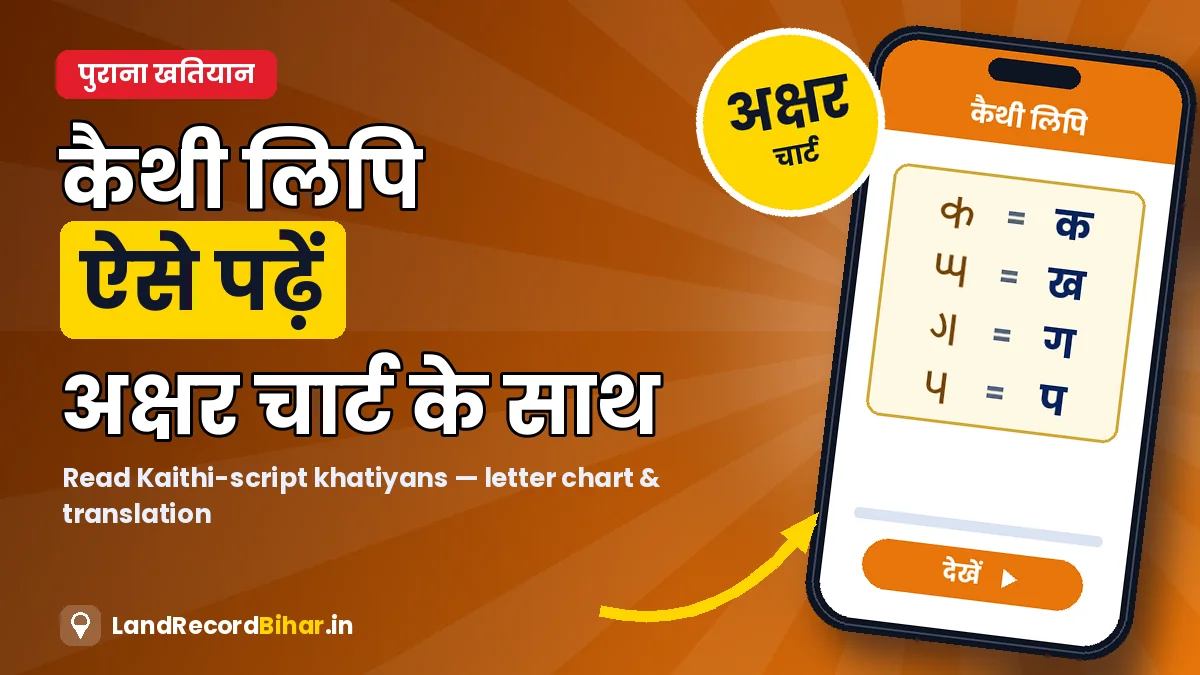
कैथी–देवनागरी मिलान चार्ट
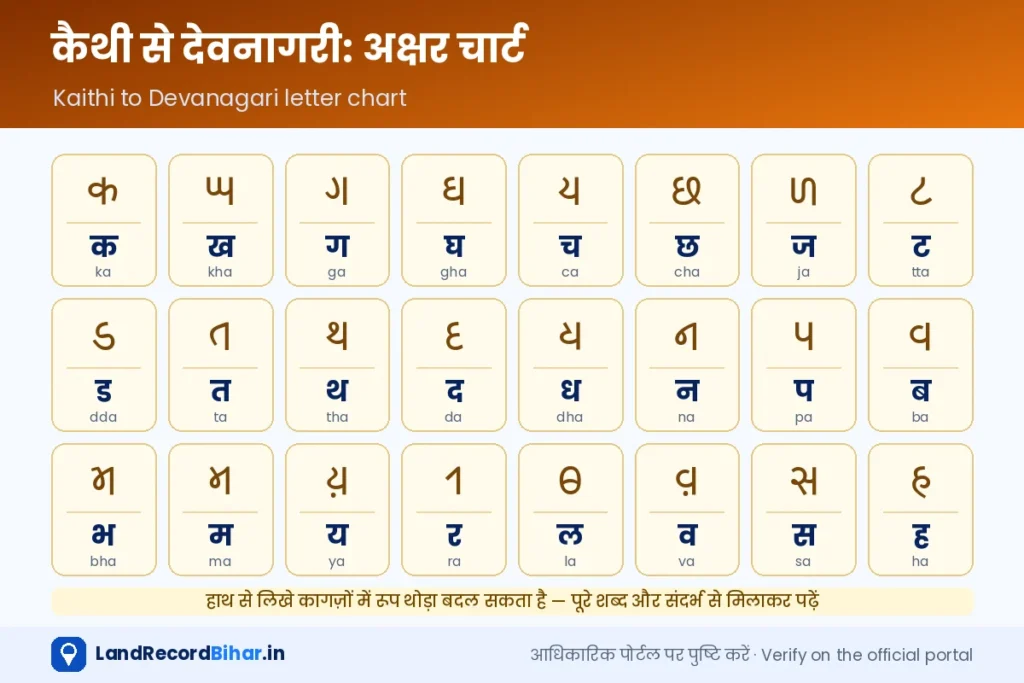
ऊपर के चार्ट में प्रमुख व्यंजनों का मानक (यूनिकोड) कैथी रूप और उसका देवनागरी अक्षर दिया गया है। हाथ से लिखे पुराने कागज़ों में लिखने वाले की शैली के अनुसार रूप थोड़ा बदल सकता है, इसलिए पूरे शब्द और संदर्भ — जैसे नाम, मौजा, खाता, खेसरा — के साथ मिलाकर पढ़ें।
खतियान में कहाँ क्या लिखा होता है
पुराने खतियान में आम तौर पर ये खाने होते हैं: मौजा का नाम और थाना संख्या, खाता संख्या, रैयत का नाम, पिता का नाम, जाति/पता, खेसरा (प्लॉट) संख्या, रकबा, किस्म जमीन और लगान। अंक (संख्याएँ) भी कैथी शैली में हो सकते हैं। पहले संख्या वाले खाने पढ़ें — खाता और खेसरा मिल जाएँ तो बाकी नाम पढ़ना आसान हो जाता है।
आधिकारिक कैथी अनुवाद सेवा — कैसे लें
- साफ़ स्कैन बनाएँ: पूरा पेज, सीधा और अच्छी रोशनी में — धुंधली फ़ोटो से अनुवाद गलत होता है।
- बिहार भूमि पर लॉगिन करें: नागरिक लॉगिन (नए हैं तो पंजीकरण)।
- “कैथी दस्तावेज़ अनुवाद सेवा” चुनें: दस्तावेज़ अपलोड करें और अनुरोध जमा करें।
- स्थिति देखें: अनुवाद तैयार होने पर हिंदी पाठ प्राप्त करें और मूल से मिलाएँ।
कैथी अनुवाद (लॉगिन) ↗ कैथी पुस्तिका (PDF) ↗
अगर आपके पास खतियान की पुरानी फटी प्रति है, तो पहले भू-अभिलेख पोर्टल से डिजिटल हस्ताक्षरित खतियान निकालें — साफ़ स्कैन मिलेगा और अनुवाद आसान होगा।
कैथी कागज़ कहाँ काम आते हैं
- विशेष सर्वे की स्वघोषणा में हक का प्रमाण
- वंशावली में खतियानी रैयत की पहचान
- परिमार्जन में सही नाम/रकबे का सबूत
- न्यायालय के मामलों में पुराना रिकॉर्ड
अक्सर पूछे जाने वाले प्रश्न
क्या कोई ऐप कैथी पढ़ सकता है?
हाथ से लिखी पुरानी कैथी को मशीन से पढ़ना अभी भरोसेमंद नहीं है। आधिकारिक अनुवाद सेवा या अनुभवी व्यक्ति की मदद लें, और महत्वपूर्ण कामों में अनुवाद को मूल से मिलवाएँ।
क्या मैं खुद कैथी सीख सकता हूँ?
हाँ। व्यंजनों के रूप याद हो जाएँ तो नाम और संख्याएँ पढ़ना संभव है। विभाग की कैथी पुस्तिका और ऊपर का चार्ट शुरुआत के लिए अच्छे हैं।
निष्कर्ष: कैथी में लिखा पुराना खतियान आपकी जमीन का सबसे पुराना सबूत है। उसे साफ़ स्कैन करें, डिजिटल खतियान निकालें, आधिकारिक अनुवाद सेवा लें और अनुवाद को सँभालकर रखें।
Open a great-grandfather’s khatiyan or deed and many people get stuck — the letters look like Devanagari but can’t be read. That’s Kaithi script, in which most of Bihar’s old survey khatiyans, deeds and revenue papers were written. Few people read it today, yet in the special survey, inheritance and land disputes these old papers are the strongest evidence. This guide shows how to recognise Kaithi, gives a Kaithi–Devanagari chart and explains the official translation service.
What is Kaithi?
Kaithi is an old script of north India, especially Bihar and eastern Uttar Pradesh, once common in courts, zamindari accounts and revenue records. Khatiyans from several old Bihar surveys (such as the cadastral survey) are in Kaithi. The language is the same Hindi/Bhojpuri/Magahi — only the script differs.
Easy ways to recognise Kaithi
- No headline: letters lack Devanagari’s long top line.
- Fewer vowel signs: short and long i/u are often not distinguished.
- Sha, ssa, sa: usually one “sa”-like letter for all three.
- Familiar shapes: many letters resemble Gujarati, as the two share a similar form.
Kaithi–Devanagari chart
The chart shows the standard (Unicode) Kaithi form of the main consonants with their Devanagari equivalents. In old handwritten papers the shapes vary with the writer’s hand, so read whole words in context — names, mauza, khata, khesra.
What’s where in a khatiyan
An old khatiyan usually has columns for mauza name and thana number, khata number, raiyat’s name, father’s name, caste/address, khesra (plot) number, area, land type and rent. Numerals may be in Kaithi style too. Read the number columns first — once khata and khesra match, the names get easier.
Using the official Kaithi translation service
- Make a clear scan: the full page, straight and well lit — blurry photos give wrong translations.
- Log in to Bihar Bhumi: citizen login (register if new).
- Choose “Kaithi document translation”: upload the document and submit.
- Track it: collect the Hindi text when ready and compare with the original.
Kaithi translation (login) ↗ Kaithi handbook (PDF) ↗
If your copy is old and torn, first download a digitally signed khatiyan from Bhu-Abhilekh — you’ll get a clean scan that is easier to translate.
Where Kaithi papers matter
- Proof of title in the special-survey self-declaration
- Identifying the khatiyan holder in the family tree
- Proof of the correct name/area in Parimarjan
- Old records in court cases
FAQs
Can an app read Kaithi?
Machine reading of old handwritten Kaithi isn’t reliable yet. Use the official service or an experienced reader, and for important matters have the translation checked against the original.
Can I learn Kaithi myself?
Yes. Once the consonant shapes are familiar, names and numbers become readable. The department’s handbook and the chart above are a good start.
Bottom line: an old Kaithi khatiyan is your land’s oldest proof. Scan it clearly, get the digital khatiyan, use the official translation service and keep the translation safe.